You're Not Getting More Fragile. Your Brain Is Getting More Precise About What Matters.
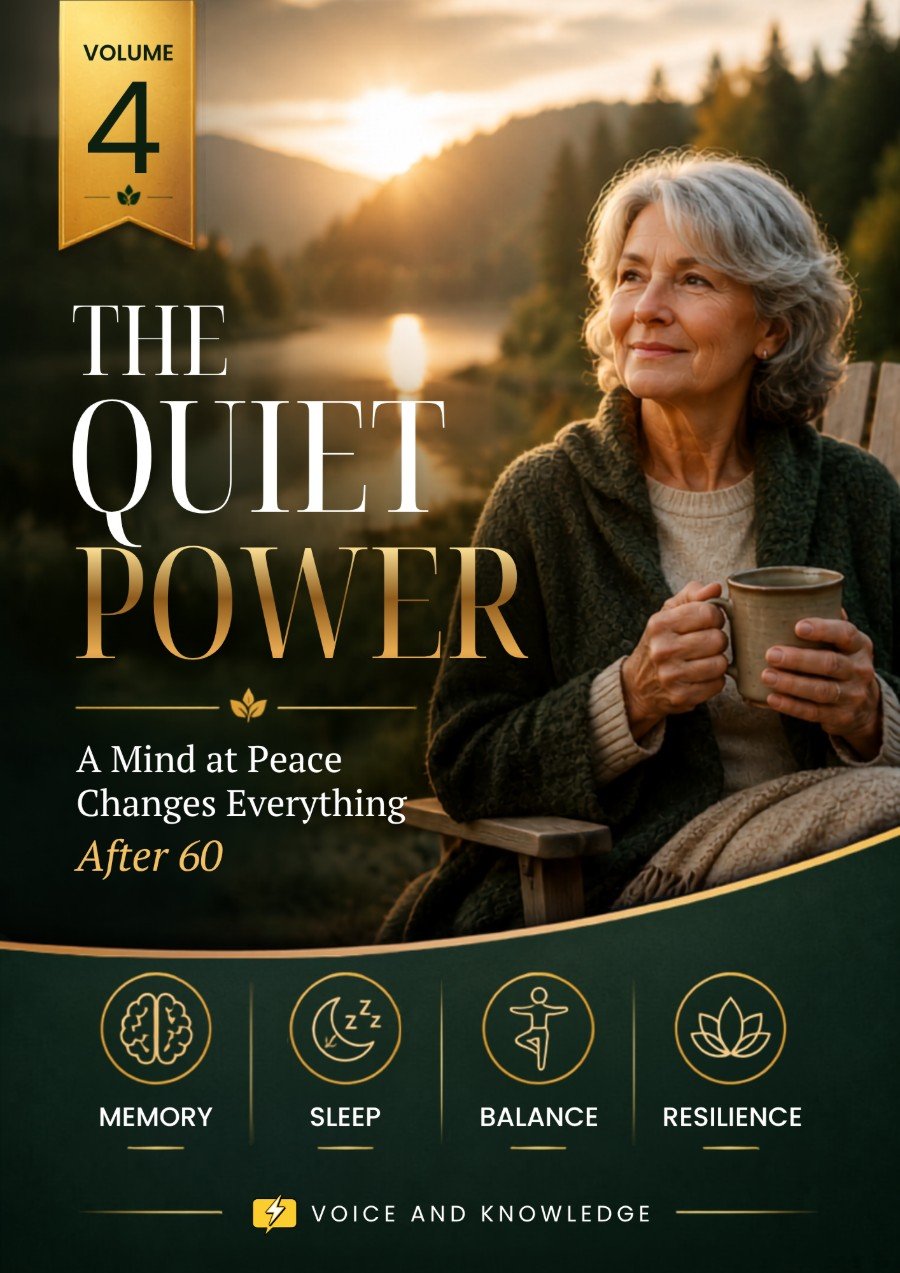
The Quiet Power walks you through what neuroscience actually says about memory, sleep, emotion, and purpose after 60 — separating normal change from what's worth a doctor's visit, in plain English.
Get The Quiet Power — $17.90 →Instant digital delivery · 7-day money-back guarantee
You forget a neighbor's name mid-sentence and it comes back thirty seconds later. A song plays and, out of nowhere, it brings you to tears in a way it never used to. You notice you're more short-tempered with the people you love most, and more patient with everyone else.
Most people quietly file all of that under "something's wrong with me." The research says something different: much of it is your brain recalibrating, not declining — becoming more attuned to what actually matters, less filtered by the noise that used to compete for its attention.
The Quiet Power takes the current science on memory, sleep, emotional health, digital health tools, and resilience — the same evidence geriatric specialists and neuroscientists work from — and turns it into a plain-English guide: what's normal, what's worth mentioning to your doctor, and what to do either way.
If any of this sounds familiar, you're not alone
And it doesn't automatically mean what you're afraid it means.
Current evidence, not vague reassurance
The Quiet Power is organized around brain health and memory, restorative sleep, emotional balance, digital health tools, and resilience and purpose. Each chapter follows the same structure: the science behind why it matters, a real story from someone navigating the same thing, a step-by-step protocol, a weekly checklist, and a specific list of questions to bring to your doctor.
Clarity about what's normal — and what isn't
Know which memory changes are normal aging and which are worth asking your doctor about a MoCA or MMSE baseline screening for.
Understand why CBT-I is the first-line treatment doctors are told to recommend for insomnia — and how to ask about it before your next renewal.
Learn why crying more easily or feeling things more intensely after 60 is a documented brain adaptation, not a sign of fragility.
Set up a patient portal, a phone medical ID, and a telehealth visit with a plain-English walkthrough — even if technology has always felt like someone else's world.
Build a simple five-anchor daily rhythm that gives shape to an open calendar, drawn from a 5-year study of 1,800 older adults.
The Quiet Power
Digital ebook (PDF) · Instant download
Regular price · one-time purchase
Honest answers to fair questions
"Isn't this something for therapy? Why would I need a book for it?"
This isn't a substitute for therapy — it's what helps you know when therapy (or a specific screening like PHQ-9 or GAD-7) is worth asking for in the first place. It's built to make your next conversation with a professional sharper, not to replace them.
"I already take something to help me sleep, and it works."
It may be helping you fall asleep without giving you the deep, restorative sleep your body actually needs — sedation and real rest aren't the same thing. This chapter isn't telling you to change anything on your own; it gives you the specific question to bring to your doctor or pharmacist.
"I'm from a different generation — health technology isn't really for me."
That's exactly the hesitation this chapter is built around. It walks through patient portals, telehealth visits, and phone medical IDs one plain step at a time — no assumed tech background required.
"What if I don't know how to open an ebook on my phone or Kindle?"
You'll get the file by email right after checkout, with simple instructions for opening it on whatever device you already use.
Frequently asked
What format does the ebook come in?+
A PDF you can read on your phone, tablet, computer, or e-reader.
How do I get it after I buy?+
It's emailed to you immediately after checkout — no waiting, no shipping.
Does this replace therapy or a mental health provider?+
No. It's built to help you recognize what's normal, what's worth raising, and how to ask for it — the care itself stays with your healthcare team.
Is this a subscription or a one-time purchase?+
One-time purchase. You keep the file and can return to it anytime.
What if it's not for me?+
You have 7 days to request a full refund, no questions asked.
You don't need to fix everything about how you sleep, remember, feel, or spend your days this week. You need to know which one or two shifts, backed by real evidence, would actually make a difference.
Get The Quiet Power — $17.90Instant download · 7-day money-back guarantee
P.S. The resilience chapter alone walks you through building your "Civilian Docket" — five simple daily anchors that a 5-year study of 1,800 older adults found protected cognitive health more reliably than diet or exercise alone. That's one section of one chapter. There are four more.